
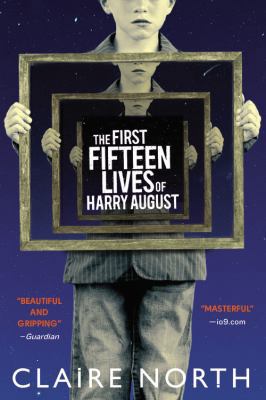
Why this book: Selected by my SEAL reading group – something different from a different genre
Summary in 3 sentences: Harry August is dies and is reborn again and again in the same place and time and retains all his memories with each rebirth. As a child he has to pretend he doesn’t know all that he does and over many lifetimes learns to pretend to be normal, in order to take advantage of his knowledge and wisdom, and he sets different goals in different lifetimes. Eventually he finds other people with this unique “ability” or gift and one of them is seeking to strategically accumulate knowledge over his many lifetimes that he plans to use to create a God-like entity which will prevent the armageddon that he foresees we are headed toward.
My impressions: This was a strange book- but interesting. I listened to it, and because Harry August was a Brit, it was narrated by a Brit – accent wasn’t hard to follow, but hearing the story in afrom someone who is clearly a Brit telling the story in a British accent drove home to me the cultural differences between Harry August and myself as an American. Once I eventually believed I’d figured out what was going on with his “reincarnation” over and over again into himself in the same time and place, I enjoyed his perspectives on the different paths he chose in each life, after learning from previous iterations of “Harry August.”
In addition to being reborn as himself again and again, Harry had to learn how to live with his “unique” ability – and Harry also had the “gift” of perfect recall – so he remembered EVERYTHING from his previous lives, which made him a rare “mnemonic” among those who had his strange gift. A “mnemonic” in this book is a person with total recall from previous lives. During his many lifetimes Harry tried a number of possible life paths, one of which included suicide, one included led to him being institutionalized as insane after he told his wife about his repeated rebirths. He eventually was able to determine that he wasn’t unique – that there were other people with this “gift” of constant rebirth to relive their lives again and again. These people called themselves “kalachakra” and when they found each other, they were brought into a secret organization called Chronus Clubs. “Kalachakra” is apparently a Sanskrit word that refers to “Wheel of Time” an important concept in Tibetan Buddhism.
Over the course of his many lives, we share Harry’s experiences as he learns, evolves, and figures out how to deal with his ability to recall and learn from previous incarnations. He tries to keep his gift secret – after seeing how he was treated – locked away in an institution – when he revealed to his wife how he’d lived multiple times. These people find each other and bring them into their secret society – called Chronus Clubs all over the world. The Chronus club in the UK eventually finds Harry and is brought into the fold, where he connects with others with the same gift and learns from them how they pass information to others who will come after them, living again and again in the same time window. In one of his later lives he realizes that something strange, unsettling, is going on with the various Chronus clubs he’s contacted, and he embarks on trying to find out why they have started to disappear.
Harry had an engineers/scientists mind, and over several lives became extremely well read in the current state of physics, eventually attaining a professorship in physics at a prestigious university. One of his students, Vincent, is a very precocious and ambitious young man, who Harry eventually realizes is another Kalachakra. Vincent has ambitions of accumulating scientific knowledge over multiple lifetimes and bringing it back in future incarnations to speed up the development of science to accelerate the advance of technology and civilization. This effort to change the future violates Chronus Club ethics and policy, but Vincent could care less about Chronus Club concerns – he’s on a personal mission to accumulate enough knowledge to speed up human evolution. And he’s not going to let the Chronus Club get in his way.
Once Harry realizes this, he realizes that Vincent is on megalomaniacal quest, and Harry sees grave danger in his ambitions. Harry is deeply concerned that Vincents efforts will yield unpredictable and negative results, and over multiple lives seeks to find and stop Vincent. This becomes a cat-and-mouse game that lasts over several lifetimes. As part of his plan, Vincent develops a way to neutralize the efforts of kalachakras to get in his way be erasing all memories of previous lives and knowledge. Without memories from previous lives, a Kalachakra will be born again with a blank slate and no memory of previous lives, and must learn from scratch just like everyone else. By erasing the memories of other kalachakras, he intends to undermine the efforts of the kalachakras and the Chronus Clubs to stop him on his quest. He tricks them into submitting to this memory erasing treatment.
Eventually Harry is able to connect with Vincent in his fifteenth life, win his confidence and the end of the book describes how Harry is able to trick Vincent, the master trickster.
There are a number of ethical dilemmas and issues in this book worthy of discussion.
- Is it “right” to use knowledge of the future to interject oneself to change the future?
- There are times when decides to prevent evil he knows people will commit based on having known them in previous incarnations, by killing them, though they haven’t yet committed any evil. So called “preemptive justice.” This was an issue in the movie “Minority Report.”
- Is perfect recall a gift or a curse? How does the degree to which one remembers (or forgets) affect one’s sense of identity?
- Is Vincent’s goal of near-perfect knowledge indeed an ethical goal?
- How do we feel about sacrificing others toward a huge goal -like god-like knowledge – sacrificing people who have not committed to this goal, or may even oppose it?
- If one has knowledge of the future, is it ethical to withhold that knowledge, even though by revealing it, one might mitigate suffering or death? What about unintended consequences? Is it more ethical to take no action if you “know” that something could result in catastrophe, or to act and accept unintended consequences?
An Alternative read: If you find the theme of being reborn again and again in the same body intriguing, I’d recommend Replay by Ken Grimwood (my review of it here.) A really fun page-turner, much more straightforward than Harry August. It is also a sci-fi fantasy but about a 20th century American guy who most healthy American men could relate to, who dies in his mid/late 40s and wakes up to find himself back in his body in his college dorm, 18 years old with all his memories and experience from his previous life. He takes advantage of all the opportunities healthy American guys could relate to – lots of fun, sex, money, crazy adventures and more, then dies again in his late 40s and starts all over again – and again and again. Interesting to see how the freedom to get all the things guys would love to have got boring after a while, leading to a wisdom otherwise hard to achieve, and how he evolves. I related to and enjoyed Replay much more than The First Fifteen Lives of Harry August – just in case that might appeal to you.





 Bob's Books